




Pet Toys & Supplies
  • Paws Up for Playtime! Discover Toys That Keep Tails Wagging.
  • Shop all Toys

  • Caring for Your Pet, Simplified – Quality Supplies for Every Pet Parent!
  • Shop all Pet Supplies

  • National Deaf Dog Awareness Week: Understanding and Celebrating Deaf Dogs

    National Deaf Dog Awareness Week: Understanding and Celebrating Deaf Dogs

    Celebrating National Deaf Dog Awareness Week

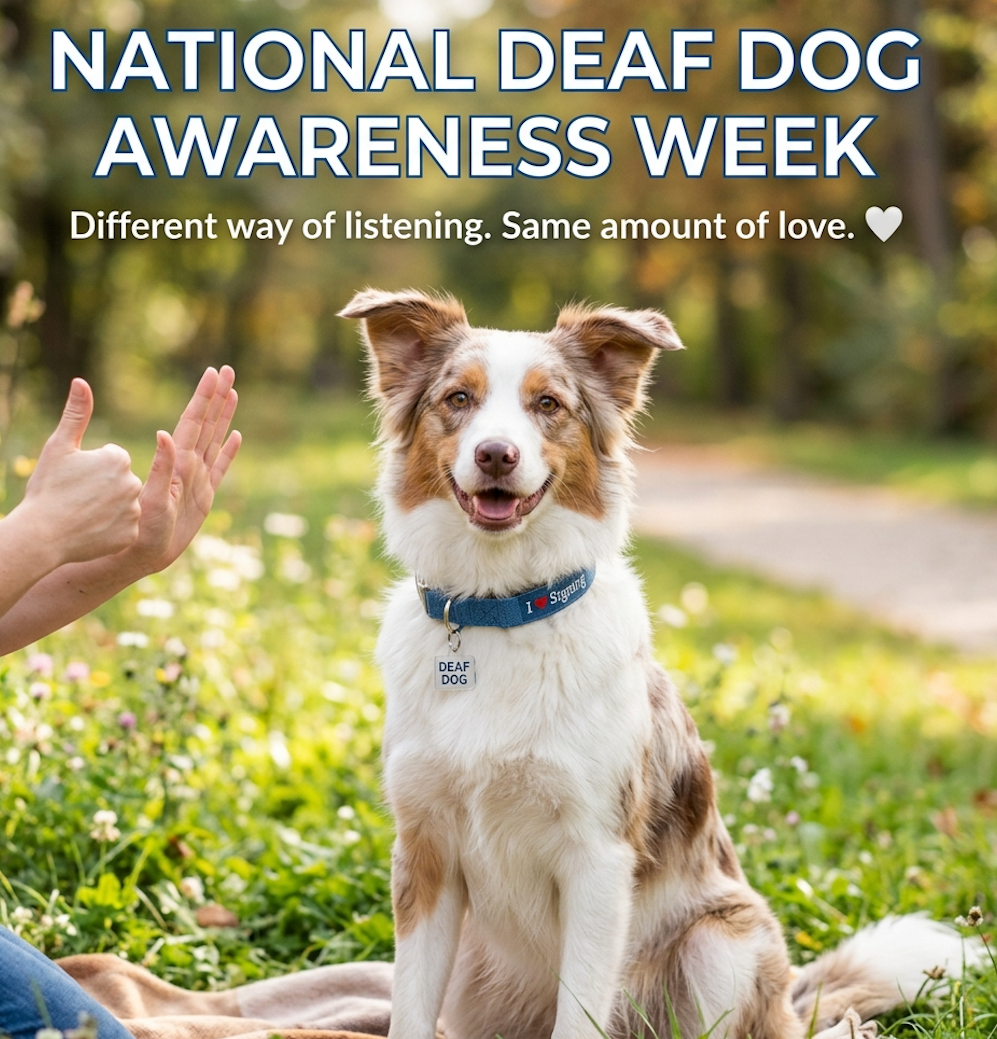
    National Deaf Dog Awareness Week is a meaningful opportunity to celebrate deaf dogs and help families better understand their unique needs and abilities.

    Deaf dogs experience the world differently from dogs who can hear, but deafness does not prevent them from enjoying a happy and fulfilling life. They can learn new behaviors, communicate with their families, enjoy playtime, explore their surroundings, and form incredibly strong bonds with the people who love them.

    With patience, consistency, visual communication, and a little understanding, deaf dogs can thrive in their homes and communities.

    What Causes Deafness in Dogs?

    Dogs can be deaf for several reasons. Some are born deaf, while others gradually lose their hearing as they age. Hearing loss can also be associated with genetics, certain illnesses, injuries, or other conditions.

    Deafness can affect one or both ears. Every deaf dog is different, so understanding an individual dog's abilities and personality is an important part of providing appropriate care.

    Rather than focusing on what a deaf dog cannot hear, it can be helpful to focus on the many other ways they interact with the world.

    How Do Deaf Dogs Communicate?

    Communication with a deaf dog often relies on visual signals rather than spoken commands.

    Hand signals can be used to teach behaviors such as sitting, staying, coming, and lying down. Dogs are excellent observers, and many can learn to recognize consistent gestures and body language.

    Positive reinforcement can make training especially rewarding. Treats, toys, praise through touch, and other forms of encouragement can help a dog understand which behaviors are desirable.

    The most important thing is consistency. Everyone in the household should use the same signals whenever possible. Clear communication helps prevent confusion and allows the dog to learn with confidence.

    Tips for Training a Deaf Dog

    Training a deaf dog can be a rewarding experience. The approach may be different from traditional training, but the principles of patience and positive reinforcement remain important.

    Here are some helpful considerations when training a deaf dog:

    1. Use clear and consistent hand signals.

    2. Reward desired behaviors promptly.

    3. Make sure the dog can see you before giving a visual cue.

    4. Keep training sessions positive and engaging.

    5. Avoid startling the dog whenever possible.

    6. Practice important cues regularly in different environments.

    With time and repetition, visual signals can become an effective form of communication between a deaf dog and their family.

    Helping Deaf Dogs Feel Safe and Comfortable

    A deaf dog may become startled if someone suddenly touches them, particularly while they are sleeping or unable to see the person approaching.

    Whenever possible, approach a deaf dog within their field of vision. Families can also teach their dog a gentle signal that means someone is nearby or wants their attention.

    Establishing predictable routines can provide additional reassurance. Consistent schedules for meals, walks, play, and rest can help a dog become familiar with daily activities.

    A calm and supportive environment can make a significant difference in helping a deaf dog feel secure.

    Can Deaf Dogs Play and Enjoy Life?

    Absolutely.

    Deaf dogs can enjoy many of the same activities as hearing dogs. They can play with toys, go for walks, participate in training, explore safe environments, and spend quality time with their families.

    Games can be adapted to focus on visual cues and other senses. Puzzle toys, scent based activities, interactive games, and supervised play can provide both mental stimulation and physical exercise.

    Play is not only about entertainment. It can also help strengthen the relationship between a dog and their family.

    Safety Tips for Deaf Dogs

    Safety is particularly important when caring for a deaf dog because they cannot hear potential hazards such as approaching vehicles, bicycles, or other animals.

    Keeping a deaf dog securely contained or using a leash outdoors can help reduce risks. A securely fenced yard can also provide a safe place for exercise and exploration.

    Identification is another important consideration. An identification tag can let others know that a dog is deaf if they ever become separated from their family.

    Families should also consider teaching visual safety cues and helping their dog become comfortable navigating familiar surroundings.

    Understanding Deaf Dogs and Their Abilities

    One of the most important messages of National Deaf Dog Awareness Week is that deafness does not define a dog's entire life.

    A deaf dog can be affectionate, playful, curious, intelligent, energetic, and deeply connected to their family. Their communication may look different, but their capacity for companionship and love remains.

    When people take the time to understand how deaf dogs communicate and learn, they can discover just how capable these dogs truly are.

    How Families Can Support Deaf Dogs

    Supporting a deaf dog starts with understanding and patience.

    Families can make their homes more comfortable by establishing consistent routines, using visual communication, providing appropriate enrichment, and taking additional safety precautions outdoors.

    Most importantly, deaf dogs need the same things every dog needs: companionship, care, mental stimulation, exercise, patience, and plenty of love.

    Celebrating Deaf Dogs During Awareness Week

    National Deaf Dog Awareness Week is more than a time to recognize hearing loss in dogs. It is an opportunity to celebrate the abilities, personalities, and relationships that make every dog unique.

    Deaf dogs can learn. They can communicate. They can play. They can explore. They can form extraordinary bonds with their families.

    Their world may be quieter, but it can still be filled with discovery, companionship, affection, and joy.

    By learning how to communicate with deaf dogs and understanding their needs, we can create environments where they have the opportunity to live confident, safe, and fulfilling lives.

    This National Deaf Dog Awareness Week, take a moment to celebrate deaf dogs and the families who give them the patience, understanding, and support they deserve.