

Pet Toys & Supplies
  • Paws Up for Playtime! Discover Toys That Keep Tails Wagging.
  • Shop all Toys

  • Caring for Your Pet, Simplified – Quality Supplies for Every Pet Parent!
  • Shop all Pet Supplies

  • Why Keeping Your Dog Hydrated Is One of the Best Things You Can Do for Their Health

    Why Keeping Your Dog Hydrated Is One of the Best Things You Can Do for Their Health

    As dog owners, we all want our furry companions to live long, happy, and healthy lives. We carefully choose nutritious food, make time for walks, and shower them with love. But there's one simple part of their daily care that's easy to overlook—making sure they drink enough water.

    Just like people, dogs rely on water to keep their bodies working properly. In fact, water is one of the most important nutrients your dog needs every single day.

    Why Is Hydration So Important for Dogs?

    A dog's body is made up of about 60–70% water. Every organ, muscle, and cell depends on it to function properly. Without enough water, your dog can quickly become dehydrated, which may affect everything from their energy levels to their overall health.

    Proper hydration helps your dog:

    • -Regulate their body temperature

    • -Digest food and absorb nutrients

    • -Support healthy kidney function

    • -Lubricate joints for comfortable movement

    • -Transport oxygen and nutrients throughout the body

    • -Flush waste and toxins from the body

    • -Maintain healthy skin and a shiny coat

    Even mild dehydration can leave your dog feeling tired, sluggish, and uncomfortable.

    How Much Water Should a Dog Drink Each Day?

    One of the most common questions dog owners ask is, "How much water should my dog drink?"

    A good rule of thumb is that healthy dogs should drink about 50–70 millilitres of water per kilogram of body weight each day (approximately ½ to 1 ounce per pound of body weight).

    Keep in mind that every dog is different. Your dog's water needs may increase if they:

    • -Spend lots of time playing or exercising

    • -Enjoy long walks or hikes

    • -Eat mostly dry kibble

    • -Live in a hot or humid climate

    • -Are pregnant or nursing

    • -Are recovering from illness

    The easiest way to support your dog's health is to make sure fresh, clean water is always available.

    Signs of Dehydration in Dogs

    Dogs can't tell us when they're thirsty, so it's important to recognize the early warning signs.

    Watch for:

    • -Dry, sticky gums

    • -Thick saliva

    • -Sunken eyes

    • -Loss of energy

    • -Heavy panting

    • -Loss of skin elasticity

    • -Dark yellow urine

    • -Decreased appetite

    If your dog seems severely dehydrated, becomes weak, vomits repeatedly, or refuses to drink, contact your veterinarian as soon as possible.

    Easy Ways to Help Your Dog Drink More Water

    Some dogs happily empty their water bowl several times a day, while others need a little encouragement. Fortunately, increasing your dog's water intake is usually simple.

    Try these easy tips:

    • -Refresh your dog's water at least once or twice a day.

    • -Wash the water bowl daily to prevent bacteria buildup.

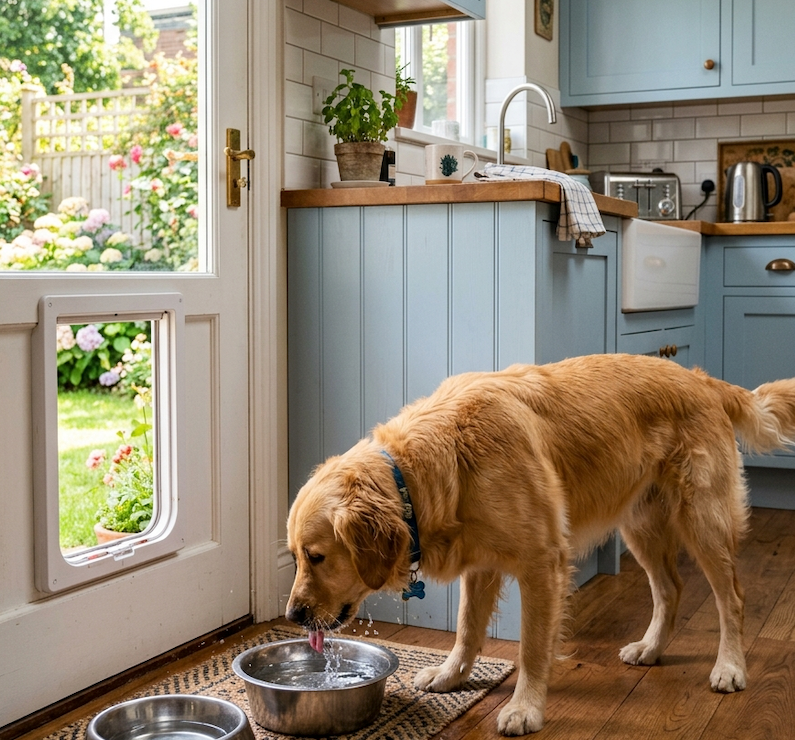
    • -Place multiple water bowls around your home.

    • -Bring water whenever you go for walks, hikes, or car rides.

    • -Add a splash of water to dry kibble if your dog enjoys it.

    • -Offer dog-safe, low-sodium bone broth occasionally for extra flavour.

    • -Consider a pet water fountain if your dog prefers moving water.

    Sometimes a small change can make a big difference.

    Extra Hydration During Hot Weather

    Summer is one of the biggest times of year for dehydration in dogs. Since dogs cool themselves mainly by panting, they lose water much faster on warm days.

    Help keep your dog safe by:

    • -Providing unlimited access to fresh, cool water

    • -Taking frequent water breaks during walks

    • -Exercising during the early morning or evening

    • -Offering shade when spending time outdoors

    • -Never leaving your dog inside a parked vehicle

    If your dog is panting excessively, appears weak, or collapses, seek emergency veterinary care immediately, as these can be signs of heatstroke.

    Puppies and Senior Dogs Need Extra Attention

    Puppies are full of energy and can become dehydrated more quickly because of their small size. Older dogs may also have a harder time staying hydrated, especially if they have kidney disease, diabetes, or other age-related health conditions.

    Keeping an eye on how much your dog drinks each day can help you notice changes early. If your dog suddenly starts drinking much more—or much less—than usual, it's a good idea to speak with your veterinarian.

    The Bottom Line

    Keeping your dog hydrated doesn't require expensive products or complicated routines. Fresh, clean water is one of the simplest and most powerful ways to support your dog's health every single day.

    Whether you're relaxing at home, heading out for an adventure, or enjoying a sunny afternoon in the backyard, always make sure your best friend has easy access to water.

    A well-hydrated dog is often a happier, healthier dog—and that's something every pet owner can feel good about.