





Pet Toys & Supplies
  • Paws Up for Playtime! Discover Toys That Keep Tails Wagging.
  • Shop all Toys

  • Caring for Your Pet, Simplified – Quality Supplies for Every Pet Parent!
  • Shop all Pet Supplies

  • Dogs in Archaeology: How Our Four Legged Friends Are Helping Uncover History

    Dogs in Archaeology: How Our Four Legged Friends Are Helping Uncover History

    When we think about archaeology, we often picture researchers carefully brushing away layers of dirt to reveal ancient treasures. While skilled archaeologists and advanced technology play a vital role in these discoveries, there is another remarkable helper earning recognition in the field: the dog.

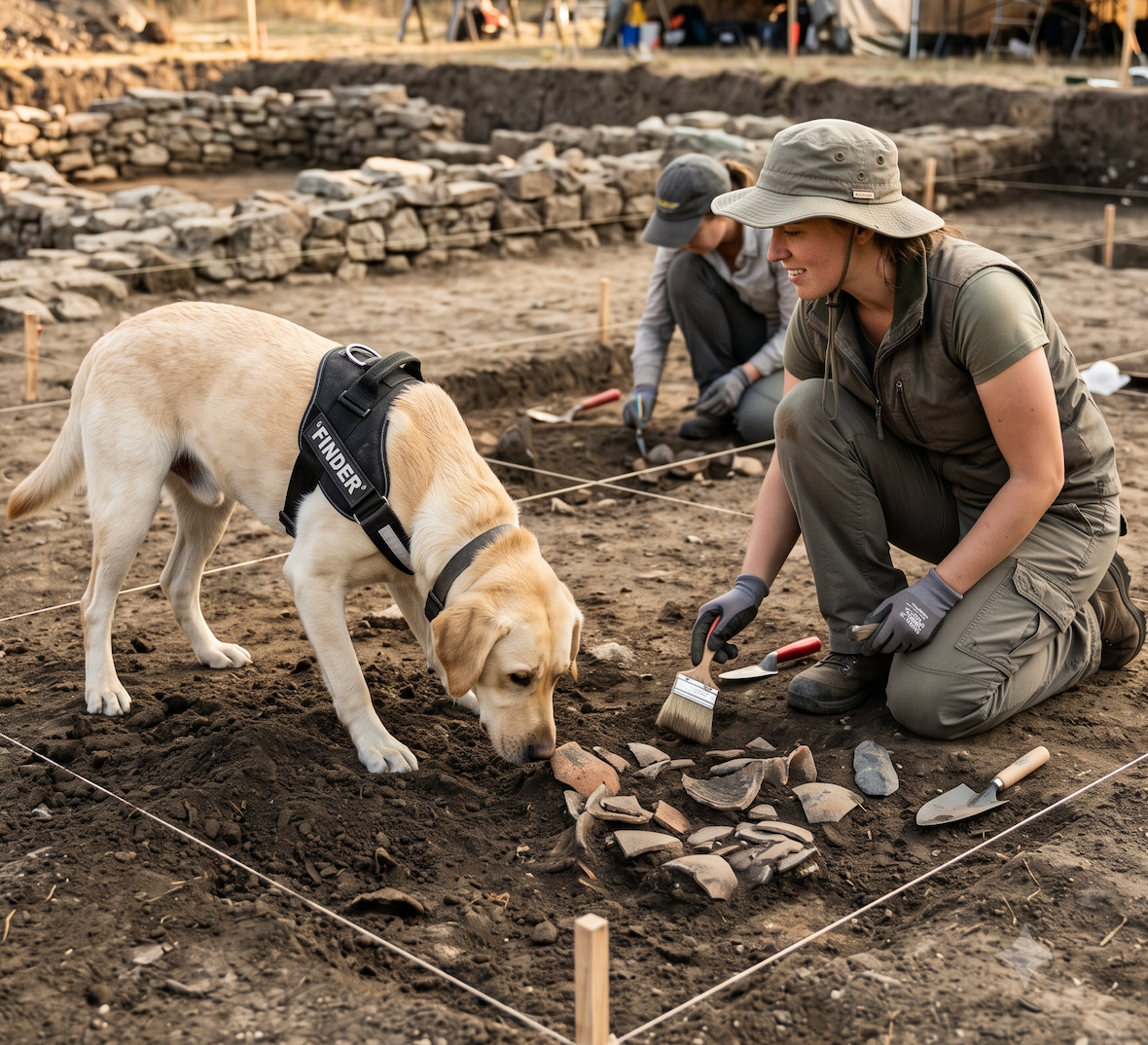
    With an extraordinary sense of smell and an eagerness to work alongside humans, specially trained dogs are helping archaeologists locate buried artifacts, ancient human remains, and historical sites that might otherwise remain hidden for generations.

    A Nose Unlike Any Other

    Dogs experience the world through their noses. While humans rely heavily on sight, dogs use scent to gather information about their surroundings.

    A dog's nose contains up to 300 million scent receptors, compared to about 6 million in humans. The part of a dog's brain responsible for analyzing smells is also proportionally much larger, allowing them to detect scents that are impossible for people to notice.

    This remarkable ability has made dogs invaluable partners in many professions, including search and rescue, conservation, medical detection, law enforcement, and archaeology.

    How Dogs Help Archaeologists

    Archaeological detection dogs are specially trained to identify the unique scents associated with ancient materials and human remains.

    Instead of digging randomly across large areas, archaeologists can use these highly trained dogs to help narrow down locations that deserve closer investigation.

    Dogs may assist by locating:

    • Ancient burial sites
    • Historical artifacts hidden beneath the soil
    • Human skeletal remains
    • Forgotten settlements and excavation areas

    Their work allows researchers to focus their efforts more efficiently while reducing unnecessary disturbance to fragile historical sites.

    Why Dogs Are So Effective

    Although objects may have been buried for decades, or even centuries, tiny scent particles can remain trapped in the soil under the right environmental conditions.

    With specialized training, archaeology dogs learn to recognize these unique scent signatures and alert their handlers when they detect something significant.

    This partnership helps archaeologists investigate sites with greater precision while preserving valuable evidence.

    Protecting Our Shared History

    Every artifact tells a story.

    Whether it is a piece of ancient pottery, a centuries old tool, or evidence of an early settlement, these discoveries help us understand how people lived, worked, and interacted with the world around them.

    By helping researchers locate important sites more accurately, dogs contribute to preserving cultural heritage for future generations.

    More Than Just History

    The use of detection dogs in archaeology also demonstrates the incredible versatility of our canine companions.

    The same remarkable noses that help find missing people, detect medical conditions, or locate endangered wildlife can also uncover pieces of history that have remained hidden beneath our feet for centuries.

    It is another reminder that dogs are far more than beloved family pets. Their intelligence, trainability, and natural abilities continue to make meaningful contributions in ways many people never imagine.

    Celebrating Our Four Legged Archaeologists

    While they may never receive museum exhibits or history books written in their honor, archaeology dogs are making an important difference behind the scenes.

    Their dedication, curiosity, and extraordinary sense of smell are helping scientists answer questions about our past while preserving history for generations to come.

    The next time you visit a museum or read about an exciting archaeological discovery, remember that one of the first "detectives" on the scene may just have had four paws and an incredible nose.

    History is not uncovered by people alone. Sometimes, it starts with a sniff.